
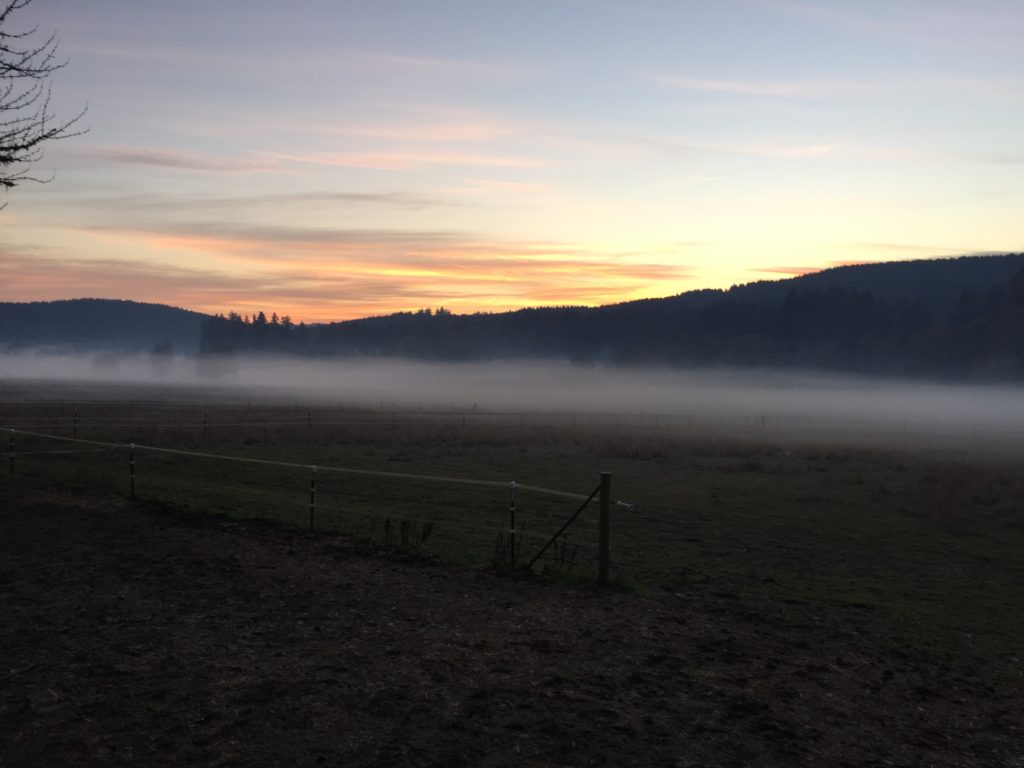
The moment I arrived at the farm I noticed how quiet things are. In the city where I previously lived and worked I was constantly inundated by noise. Day and night I contended with loud neighbors, emergency sirens, cars, trucks, airplanes, and thanks to the nearby Union Pacific railyard, even freight trains. Once on the farm however, all of that changed. Even though my first morning I was awoken at 4:30 a.m. by a passing logging truck, things are definitely a lot quieter around here.
That’s not to say that on the farm we don’t hear things. While the gravel road out front doesn’t get a lot of traffic, on most weekdays least one FedEx or UPS truck will pass by. During the day we might hear construction projects, logging operations and occasional road maintenance. We might also be treated to ravens croaking, dog barking and cows mooing. In the evenings we hear owls hooting back and forth, as well coyotes howling and elk bugling. Since the valley we live is prone to some odd acoustics, sounds travel far—especially in the summer. (Our neighbor down the road converted his barn into an event venue to host wedding receptions. One Saturday evening while lying in bed I was reminded of this as “Love Shack” from the B-52’s echoed faintly in the distance.)
I’m a lucky to live in such a quiet place, and not just for aesthetic reasons. According to recent articles in The New Yorker and The Atlantic, long-term exposure to excessive noise has been linked to a number of serious illnesses including “high blood pressure, coronary heart disease, and heart attacks, as well as strokes, diabetes, dementia, and depression.” In extreme cases, it’s even driven individuals to murder their neighbors in fits of violent rage. Looks like I couldn’t have picked a healthier place to call home.